Guides · 12 min read
YouTube marketing that wins customers
YouTube marketing for a business means making videos that the people who'd buy from you are already looking for, then giving them a clear next step. For a consultant, an agency, a coach or a service business, the goal is enquiries and booked calls. Views and subscribers only matter if the right people are behind them.
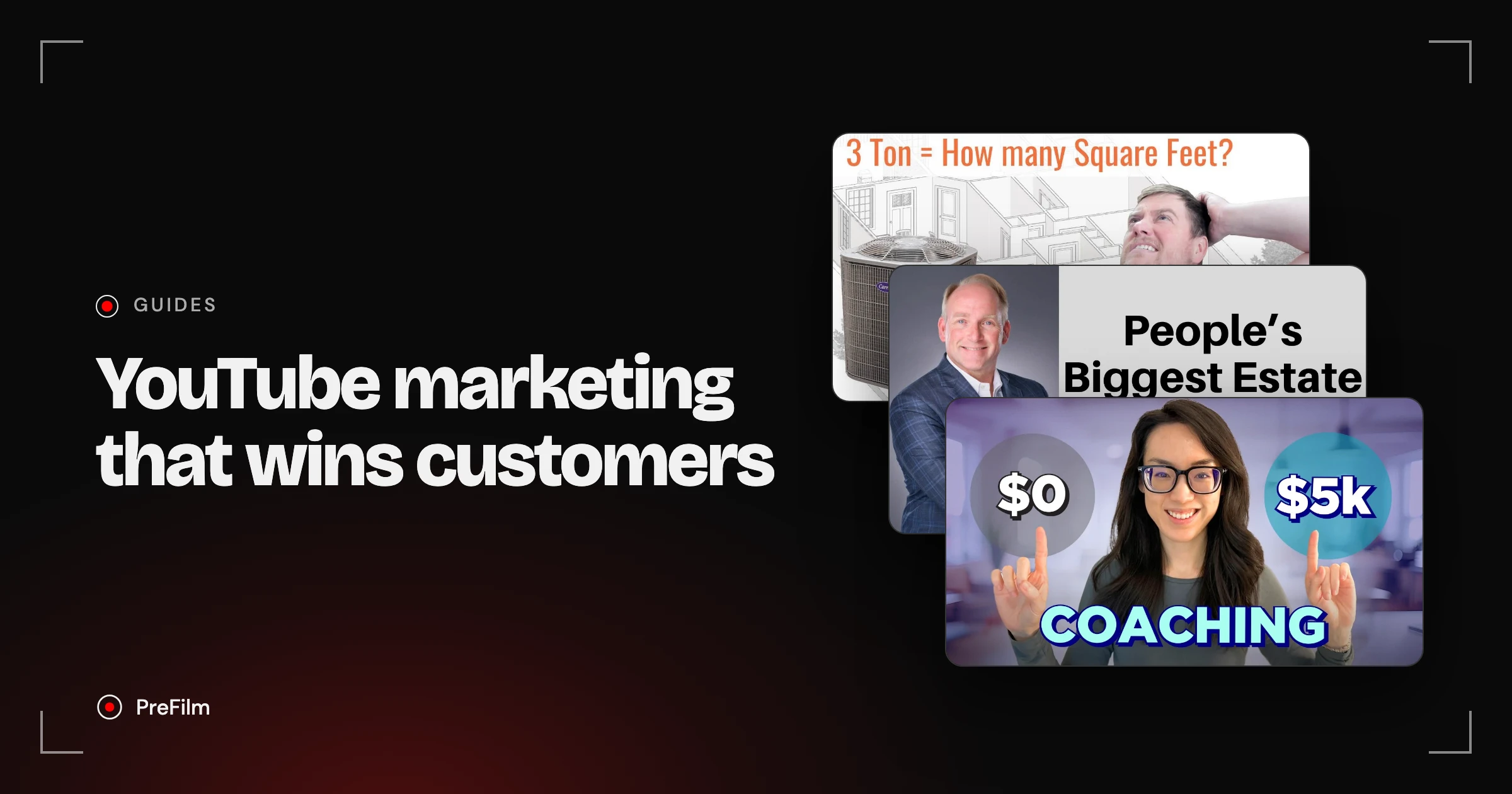
Most YouTube marketing guides are written for big brands chasing reach with a big ad budget. This one is for business owners who sell something expensive to a fairly small number of people. I turned YouTube into a six-figure revenue engine for my last company, SEOSpace, which I sold in 2025, and the lesson I took from it is simple. Customers matter more than subscribers. Below is how to plan a channel around that, with real videos from HVAC, law, accounting, coaching and interior design.
What is YouTube marketing?
YouTube marketing is using YouTube to win customers. There are three ways to do it, and most service businesses should start with the first.
| Approach | What it is | Cost | Best for |
|---|---|---|---|
| Your own channel | Videos that answer your buyers' questions, with a next step in each | Your time, or paying someone to film and edit | Services where people research before they buy |
| YouTube ads | Paying to show your video before or beside other videos, or in search | Set by your budget, paid per view, click or impression | Testing an offer fast, or pushing a video that already converts |
| Working with creators | Paying a channel your buyers watch to mention or feature you | Agreed with each creator | Reaching an audience someone else has already built |
Your own channel is the one that compounds. A video you post today can still bring in enquiries in two years, long after an ad budget has run out. Google's guide to video ad formats covers the paid side if you want to add it later.
It's also crowded. YouTube says over 20 million videos are uploaded every day on average. That's why the topic of each video decides most of the result, and why "post more" is bad advice on its own.
Why do customers matter more than subscribers?
Customers matter more because a business channel only needs a small number of the right viewers to pay for itself. Subscribers measure who wants to see your next video. They don't measure who wants to hire you.
My own numbers show the gap. My Google Search Console tutorial had 61.4K views and 539 new subscribers when I took the screenshot, 858 days after publishing. That's fewer than one subscriber for every hundred views. But videos chosen like that one, from search demand and formats that had already worked, were part of how SEOSpace got to $100K a month with $0 spent on paid ads.
It worked the same way with my ChatGPT Ads videos. A handful of them, including the Full ChatGPT Ads Course and I Spent $10,000 on ChatGPT Ads and Learned This, helped build a waitlist of 1,500 businesses. The waitlist was the point. The subscriber count was a side effect.
Here's what it looks like for a local service business. Atlas AC, an HVAC company serving San Antonio, Austin, Dallas-Fort Worth and Houston, posted "Before you buy, know the right AC square footage per ton!". It got 456,080 views, 12.7× the channel's normal of 35,923.
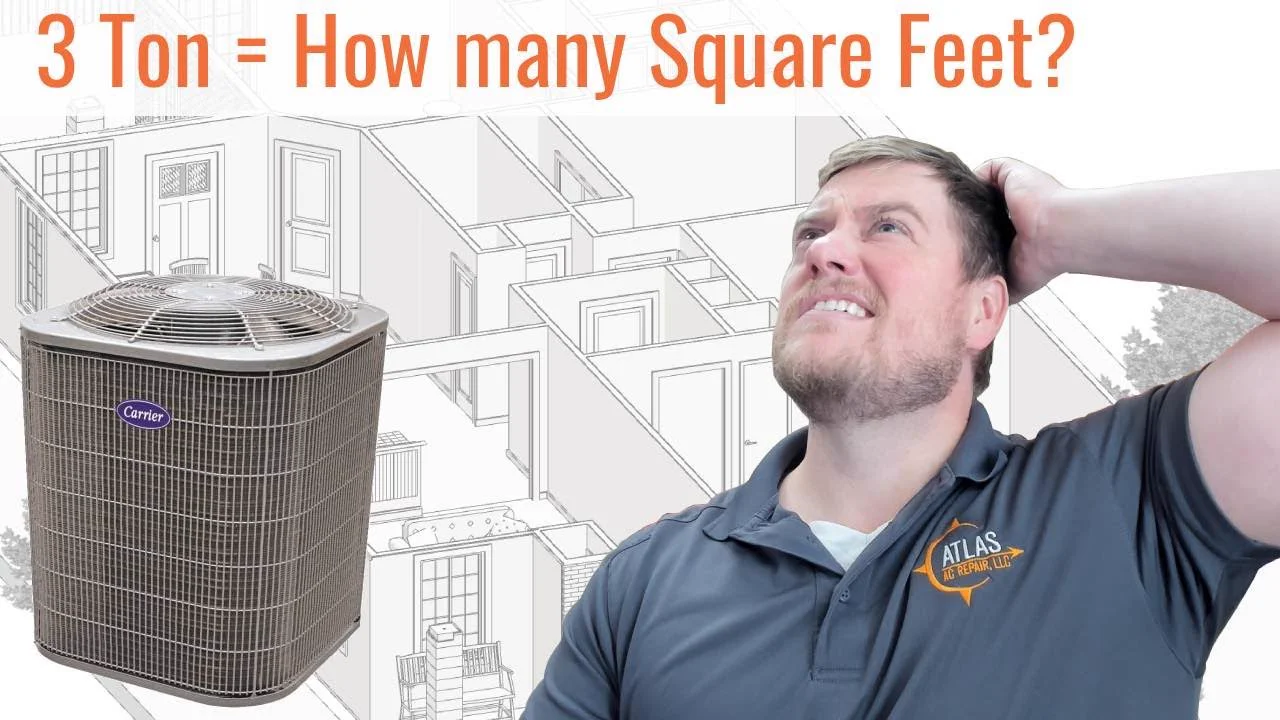
The video is a buying guide. It opens with "before you buy a new AC system" and ends by mentioning that the company runs a heat load calculation for every customer before an install. Atlas prices a new outdoor AC unit at $3,808 to $6,054 installed. And the comments are full of homeowners describing their own houses and asking what size to buy. One viewer said a contractor was trying to sell them two 3.5-ton units, and the video made them think they were being oversold. That's a buyer in the middle of a decision, learning from the company that might do the job.
Find the videos your buyers already watch
Find my winning videosIs YouTube good for B2B and high-ticket services?
YouTube is good for B2B and high-ticket services because those buyers research for a long time before they talk to anyone. Video lets them hear how you think, see how you work and decide they trust you, all before the first call.
The videos that do this best answer the questions people ask right before they hire someone. American Estate Planning Series, an estate planning attorney's channel, posted "What To Expect When Meeting with Estate Planning Attorney". It's a seven-minute walkthrough of his own first meeting with a client: how to book it, what he asks, and what a bad meeting feels like. It got 10,566 views, 8.6× the channel's normal of 1,229.

Ten thousand views is small next to a viral video. But look at the comments. One viewer asks whether he reviews existing trusts and sets up LLCs. Another asks if he has representatives in Mississippi. Another wants to know if he can do the same work in Louisiana. Those are people trying to buy.
The same channel's "How To Select An Estate Planning Attorney" did 16.4× its normal. Both videos are about the decision to hire, and both beat what the channel usually gets. That's the pattern for YouTube for B2B and professional services: the closer a video sits to the buying decision, the fewer views it needs to pay off.
How to build a YouTube marketing strategy around buyers
A YouTube marketing strategy built around buyers starts with the questions they ask before they hire you, checks which of those topics have already worked on YouTube, and puts a clear next step in every video. Here's how I'd set one up.
- Write down who buys from you. One sentence: their job, their problem and what they pay you to fix. "Homeowners in Texas replacing an AC unit" is specific enough. "Small businesses" isn't.
- List the questions they ask before they buy. Pull them from sales calls, emails and the first meeting. What does it cost? How long does it take? How do I choose someone? What happens if I do it myself? Each one is a video.
- Check which of those topics have already worked. Search each topic on YouTube and look for videos that beat their channel's normal. An outlier is a video that got far more views than its channel normally gets, and because the channel was the same size as always, it shows the topic pulled in those viewers. This is what PreFilm's video ideas does across your niche and the channels next to it, with the source video and its multiplier on every idea.
- Check search demand. Type the topic into YouTube and note the search predictions it suggests. A topic people search for keeps getting found for years. There's more on picking topics in how to find YouTube video ideas that are already proven.
- Plan the ask before you film. Decide what a viewer who's ready should do next: book a call, request a quote, download a checklist. Then decide where in the video you'll say it.
- Measure enquiries. Ask every new lead where they found you, and check which videos sent people to your site. More on this below.
Most YouTube marketing guides spend their time on channel art, tags and posting times. Those matter far less than steps 2 and 3. A well-branded channel full of videos nobody was looking for still gets no customers.
Which YouTube videos bring in customers?
The videos that bring in customers answer a question someone asks while they're deciding whether to buy. Prices, comparisons, how to choose a provider, what to expect and what can go wrong all fall into this group.
Here are real outliers in each format from service businesses, with the multiplier PreFilm measured against each channel's normal.
| Format | Real outlier | Multiplier | Works well for |
|---|---|---|---|
| What it really costs | "HVAC Repair vs. Replacement Cost: The $5,000 Rule Explained" (HVAC Guide for Homeowners) | 20.0× | Trades, home services, clinics |
| How to choose a provider | "How To Select An Estate Planning Attorney" (American Estate Planning Series) | 16.4× | Law, finance, any professional service |
| Know this before you buy | "Before you buy, know the right AC square footage per ton!" (Atlas AC) | 12.7× | Anything with an expensive purchase decision |
| What to expect when you hire us | "What To Expect When Meeting with Estate Planning Attorney" (American Estate Planning Series) | 8.6× | Consultants, lawyers, agencies |
| A clear first step | "How to Start Your Online Coaching Business TODAY (4 Simple Steps)" (Luisa Zhou) | 23.6× | Coaches and course sellers |
| An expert explains the rules | "CPA EXPLAINS: How Sole Proprietorship Taxes Work" (Navi Maraj, CPA) | 5.6× | Accountants, advisers, compliance |
A few things these have in common:
- They're specific. None of them is "tips for homeowners". Each answers one question a buyer actually types.
- They show the expert at work. The estate planning video walks through a real client meeting. The accountant walks through the actual tax forms on screen. You can judge whether you'd trust them.
- They're not long. The attorney's video is seven minutes, the Atlas AC video seven and a half. Buyers want the answer quickly.
Find the videos your buyers already watch
Show me my niche's outliersWhere should a business ask for the sale in a video?
Ask for the sale at the point where the viewer has just seen that you know what you're doing, usually after the main answer and before the recap. Ask in the first 30 seconds and most viewers haven't decided to trust you yet. Ask only in the description and plenty of them will never see it.
The videos above each ask in a different place, and the place fits the offer:
- Early, when the video is about booking. The estate planning attorney explains how to book a design meeting at 1:18, because the whole video is about that meeting.
- After the proof, for a paid product. Navi Maraj walks through a sole proprietor's full tax bill, then at 10:30 pitches his course as the way to bring that number down.
- At the end, for a free next step. Luisa Zhou gives four steps, then at 15:35 offers a free PDF plan, which leads to her paid coaching programme.
- As a soft credibility line. Atlas AC never asks directly in the video. It says the company runs a heat load for every customer before an install, and lets the description link to its pricing.
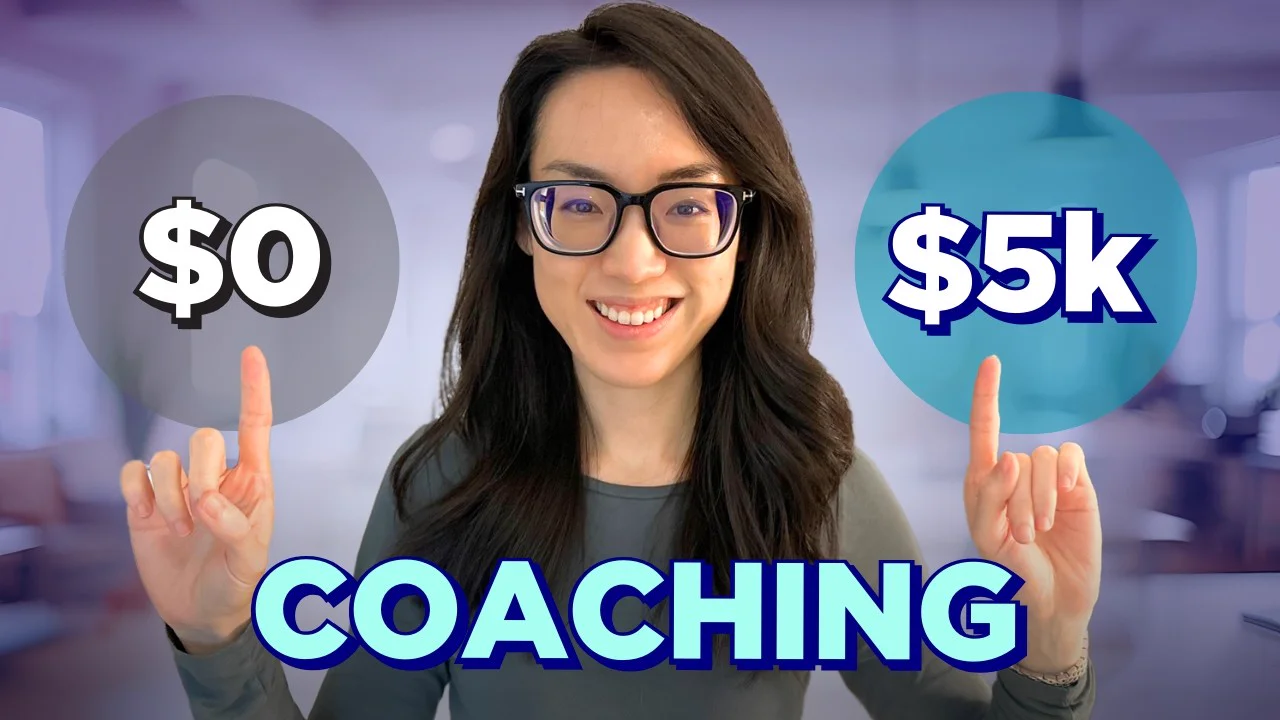
Then use YouTube's own tools to repeat the ask. Add end screens that point to your next most useful video, info cards at the moment you mention a related topic, and a link in the first line of the description. If you want the ask written into the script itself, how to write a YouTube script has a template with a section for it, and PreFilm's script writer writes the path to the sale into every script, in your voice.
When do views come from the wrong people?
Views come from the wrong people when a video answers a question your peers ask instead of one your buyers ask. It can be a real outlier and still bring in no customers, because the people watching would never hire you.
KLSY Interior Design posted "How Interior Designers MAKE MONEY: Design Fees and Purchasing Explained". With 3,770 views, it did 8.7× the channel's normal of 434. It's a clear, useful video.
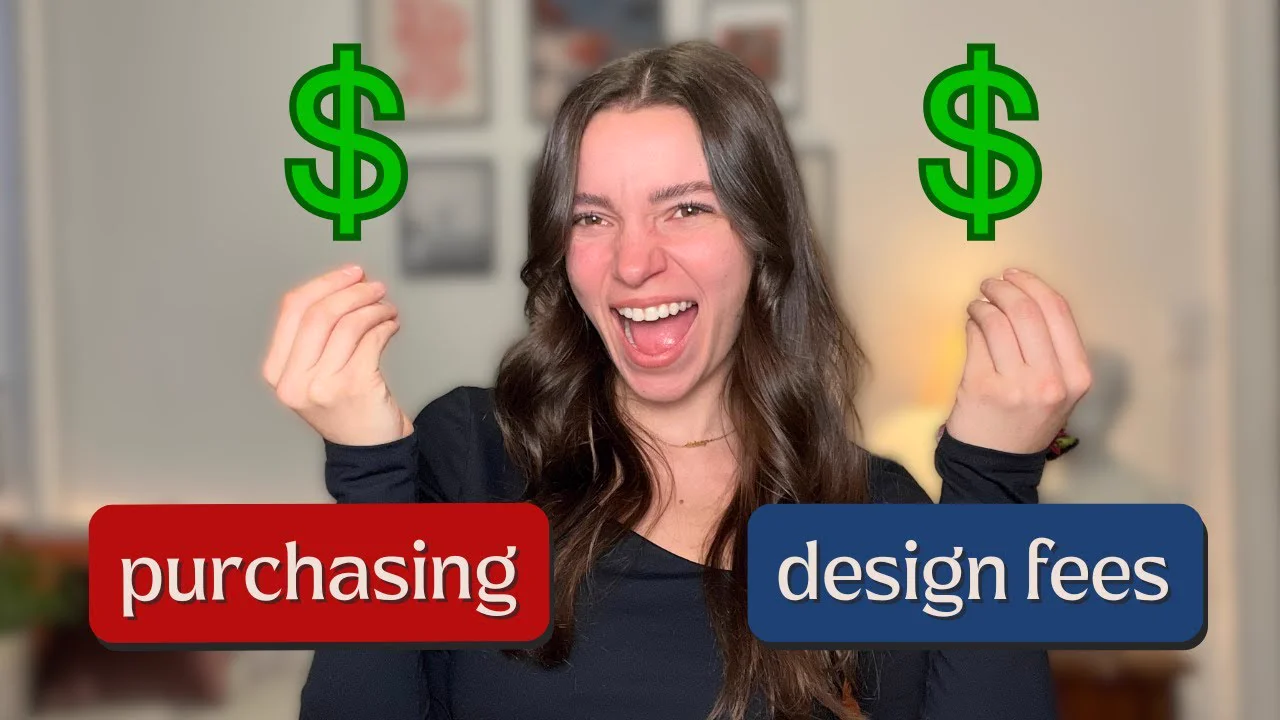
Now read the comments. Viewers ask how to estimate a flat design fee, whether you need to be certified to get trade discounts, and how to set up accounts with suppliers. Those are designers, or people starting a design business. The video ends by asking viewers to subscribe and join an email list. That's a sensible ask for an audience of designers, and a weak one for winning homeowners as clients.
It's an easy mistake to make on a business channel. Talking shop with your peers feels natural, and as KLSY's video shows, it can easily beat your channel's normal. So before you copy any outlier, check two things:
- Who's commenting? If the questions come from people who'd buy from you, it's a customer video. If they come from people who do what you do, it's a peer video.
- What would a viewer do next? If there's no sensible next step towards your offer, the topic is probably wrong for your channel, however well it did.
If you sell to other designers, coaches or agency owners, peer videos are customer videos, and Luisa Zhou's channel shows how well that can work. The point is to know which audience you're making each video for.
YouTube marketing for small business: what it costs and what to measure
YouTube marketing for a small business costs time more than money. A channel is free, and a phone with a decent microphone is enough to start. The real cost is the hours spent planning, filming and editing, which is why picking the wrong topic hurts so much.
Paying for help gets expensive fast. I once paid a YouTube agency about $5K a month for four videos, which is over $1,000 a video. At that price, a video on a topic nobody searches for is a costly guess.
Once videos are live, measure the things that lead to customers:
- Enquiries and booked calls from YouTube. Add "Where did you hear about us?" to your contact form and your first call. This is the number that matters most.
- Traffic sources. In YouTube Studio, the reach report shows how people found each video: YouTube search, suggested videos, browse features or external sites. Search traffic tends to be people with a specific problem.
- Clicks to your site. Use a tracked link in each description so you can see which videos send visitors, and which of those visitors become leads.
- Watch time on your buying videos. If people leave your pricing video in the first minute, the opening isn't answering the question fast enough.
- Click-through rate on your packaging. YouTube's A/B testing lets you test up to three titles and thumbnails on one video. Roast, PreFilm's title and thumbnail checker, can judge a title before you film, against what's working in your niche.
Notice what isn't on the list. Subscribers, likes and total views are fine to watch, but none of them tell you whether YouTube is bringing in work. If your videos are stuck on low views, start with how to get more views on YouTube, which works through the numbers in YouTube Studio one at a time.
A business channel wins when the right few hundred people watch the right videos and get in touch. Pick topics from the questions your buyers ask, check they've already worked on YouTube, and put a clear next step in every video. If you'd like the research done for you, see how PreFilm works for business channels or compare the plans.
Stop guessing what to film.
PreFilm finds the videos your buyers already watch and writes the script in your voice. $1 for 7 days.
Find my winning videosQuestions
Questions.
What is YouTube marketing?
YouTube marketing is using YouTube to win customers, through videos on your own channel, paid YouTube ads, or working with creators your buyers already watch. For most service businesses, the core is their own channel. You answer the questions buyers ask before hiring someone, and every video gives them a clear next step.
Is YouTube marketing effective for small businesses?
Yes, when the videos answer questions your buyers already ask. A small business doesn't need a big audience, because one video that ranks for a buying question can bring in enquiries for years. It works best for services where people research before they buy, such as legal, financial, home services, coaching and consulting.
Is YouTube good for B2B marketing?
YouTube is good for B2B marketing because business buyers research for weeks before they talk to anyone, and video lets them get to know you first. The videos that work for B2B explain how you work, what things cost, how to choose a provider and what to watch out for. Raw view counts matter far less.
How much does YouTube marketing cost?
YouTube marketing can cost nothing but your time, because a channel is free and a phone is enough to start. Paying for help costs more. I paid a YouTube agency about $5K a month for four videos. YouTube ads are paid per view, click or impression, so you set your own budget for those.
How often should a business post on YouTube?
One video a week is a good rhythm for most businesses, and one every two weeks is fine if each video is well chosen. Consistency matters less than topic choice. A business is better off posting two videos a month that answer real buyer questions than four that nobody was searching for.
Do I need a lot of subscribers to get customers from YouTube?
No. Customers come from the right people watching the right videos, and many of them never subscribe. Search videos get found without subscribers, and buyers often watch two or three of your videos, then get in touch. Track enquiries and booked calls from YouTube instead of subscriber count.
Should a business use YouTube ads or organic videos?
Start with organic videos, then use ads to push the ones that already turn viewers into enquiries. Organic videos keep working after you stop paying, while ads stop the day your budget does. Ads are useful for testing a new offer quickly, or for putting a proven video in front of more of the right people.